
Build your own camera DIY

Here is how it’s possible to build your own DIY home alarm and surveillance system from a Raspberry Pi – PrivateEyePi is an open source, configurable, automated home alarm system which you can build and code yourself. Its creator documented the whole system extensively and provides parts lists and pricing; wiring schematics; and all the code you’ll need. You can use motion detectors, or switches attached to doors, or a mixture of the two. There are instructions on adding cameras to the setup, and you can even add a temperature gauge to check on whether your central heating’s working when you’re away. You’ll be able to monitor everything via your computer or smart phone.

You can install PrivateEyePi from here 

DIY home alarm and surveillance system
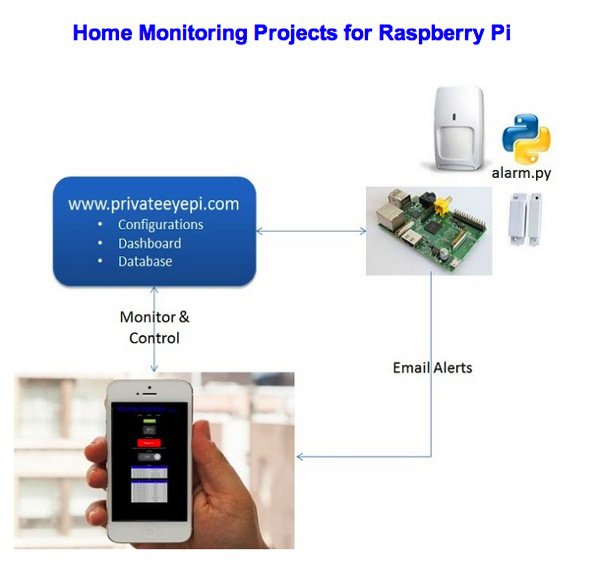
 

It is also possible to add home surveillance to the project by using a third party application called “motion” to operate the webcam. Motion is great because:

·it is free
·easy to setup
·requires a small amount of CPU processing power (good for a Raspberry Pi)
·has video streaming built in
·will create pictures and video files when motion is detected
·will trigger the PrivateEyePi alarm system when motion is detected
·is highly configurable

You can download motion from here

Required skills
The creator of the project (Gadget Nut) recommends:Basic low voltage electronic skills. We will provide you with a full inventory of electronic parts and diagrams. We will show you bread board wiring schematics for you to copy.

Basic Raspberry Pi and Linux experience. Even complete beginners with no programming, operating system or electronics experience can make this work. You can also use our blog to ask questions or email our support email.

Comments

Popular posts from this blog

Kali linux android simply amazing

How to Install and run Kali Linux on any Android Smartphone TUTORIAL FOR INSTALLING AND RUNNING KALI LINUX ON ANDROID SMARTPHONES AND TABLETS Kali Linux is one the best love operating system of white hat hackers, security researchers and pentesters. It offers advanced penetration testing tool and its ease of use means that it should be a part of every security professional’s toolbox. Penetration testing involves using a variety of tools and techniques to test the limits of security policies and procedures. Now a days more and more apps are available on Android operating system for smartphones and tablets so it becomes worthwhile to have  it on your smartphone as well. Kali Linux on Android smartphones and tablets allows researchers and pentesters to perform ” security checks” on things like cracking wep Wi-Fi passwords, finding vulnerabilities/bugs or cracking security on websites.  This opens the door to doing this from a mobile device such a...

What is DNS

D NS stands for Domain Name System is used to as the medium to translate domain names to their respective IP addresses when a client initiates a request query. DNS stores the database of all the domain names and their IP addresses which are registered on the network. Most of us are quite familiar with the term DNS or Domain Name System. DNS can be thought of as an attendance register for various websites present over the internet. In the case of DNS, it maintains the database of all the websites Domain Names and their IP (Internet Protocol) addresses that are operational all over the world. Historical Notes The origins of DNS date back to the time of the ARPANET  when there were only a few computers to get an entry in the database. A HOSTS.TXT file was maintained by Stanford Research Institute, which constituted the data of all the machines, and was copied by all the host machines to remain updated. Jon Postel from the Information Sciences Institute requested Pau...

How tor works

 Using the publicly available data, data visualization software firm Uncharted has prepared TorFlow — a map for visualizing how TOR’s data looks as it flows all across the world. It shows TOR network’s node and data movements based on the IP addresses of relays bouncing around the connections of users to avoid spying. TOR is the world’s most widely used tool for anonymity purposes . It has grown into a powerful network that’s spread all over the world. Surprisingly, the TOR project is transparent about the location of the TOR nodes and thousands of machines that power the network. This non-profit organization frequently published an updated list about the bandwidth and location of the computers and data centers spread all across the world. Using the same public data,  TorFlow  maps the TOR network’s nodes and data flow all around the world. This data movement is measured based on the IP addresses and bandwidth of the relay computers bouncing around the...